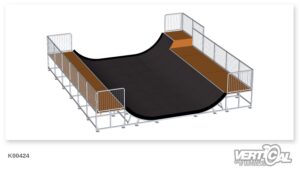
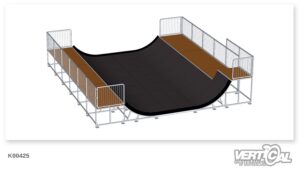
For public spaces

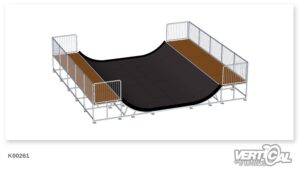
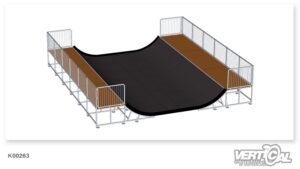
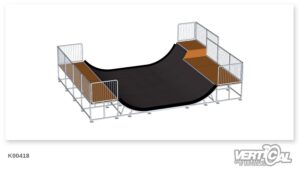
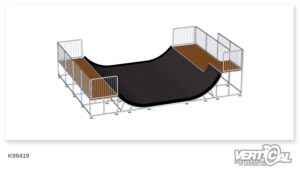
Mobile Skate Parks

Planning and building modular skateparks

Are you looking to build a mobile skate park, purchase a skate facility, or implement a flexible rental solution? Vertical Technik plans, produces, and delivers mobile skate facilities for municipalities, schools, clubs, and other public clients – from the initial idea to final implementation.

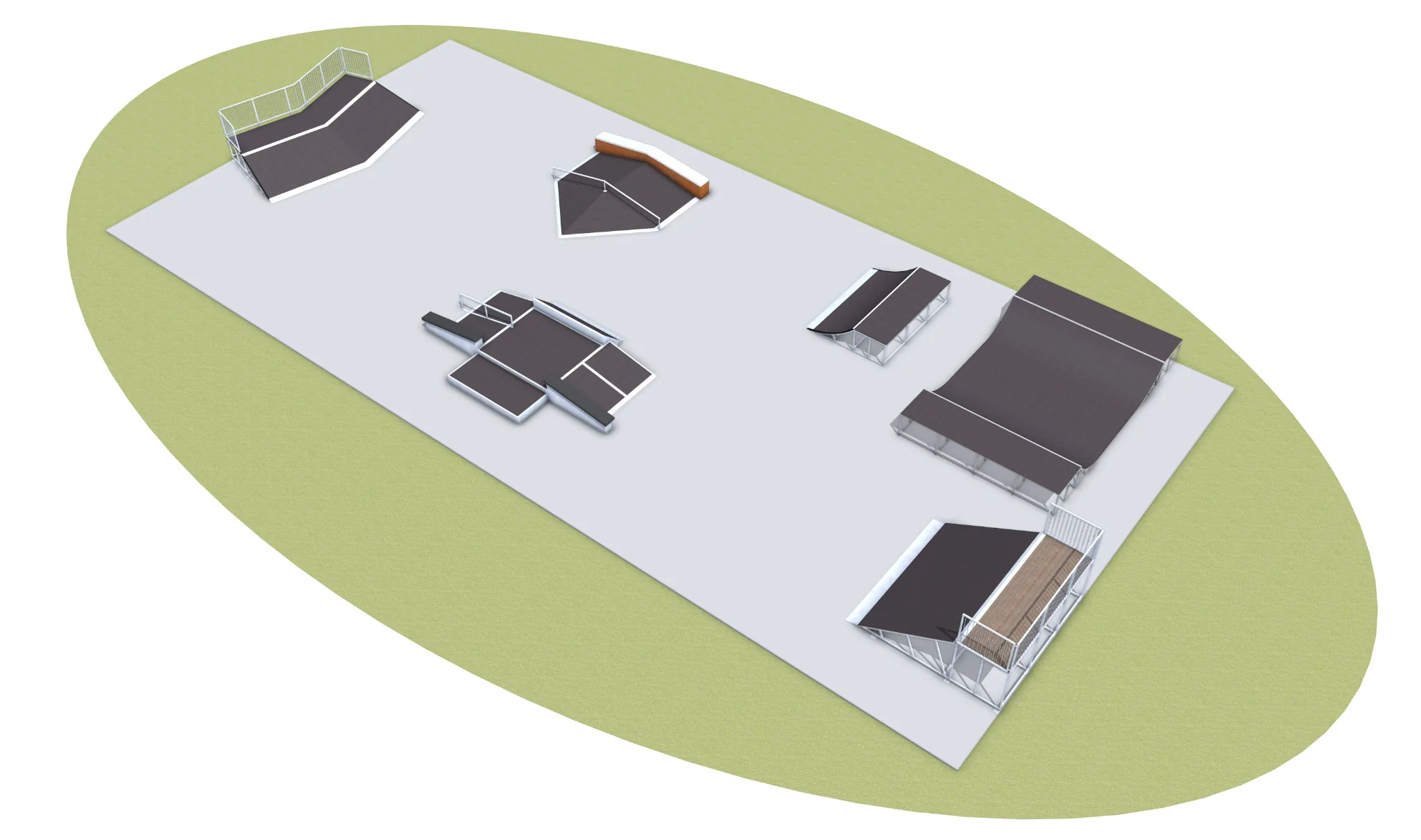
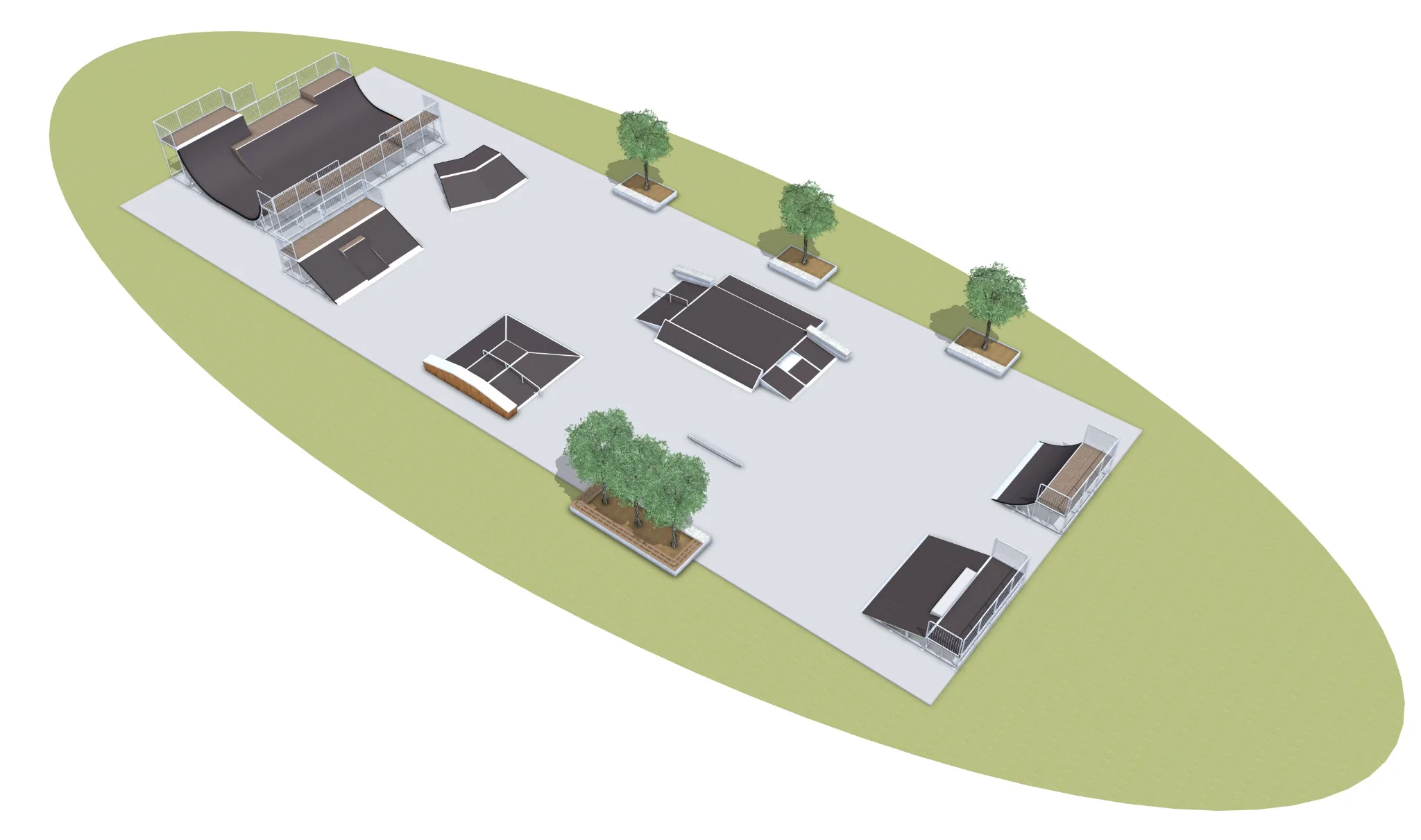
Our modular skateparks are tailored to the available space, budget and the needs of future users. The individual skate elements can be combined into a fully functioning overall facility and can later be expanded, modified, relocated or dismantled.

This makes mobile skate parks suitable for both permanent locations and events, interim use and multifunctional spaces. Depending on the project, we offer mobile skate parks for purchase, rental or long-term rental. Talk to us about the options.

Contact us

Mobile skate installations with SKATEFACE® – quiet, weatherproof and flexible

For our mobile skate facilities, we use, among other things, the SKATEFACE® riding surface developed in-house. It was designed specifically for outdoor skateparks and combines good riding characteristics with high durability, weather resistance and low maintenance requirements.

SKATEFACE® offers a balanced mix of grip and speed, is abrasion-resistant, weatherproof and dries quickly after rain. The homogeneous, non-porous surface does not absorb water, ensures low rolling resistance and provides good “pop” for tricks. At the same time, the riding surface enables comparatively quiet riding for skateboards, scooters and BMX—an important advantage for noise-sensitive locations such as residential areas, schools or multifunctional spaces.

Thanks to its flexibility, SKATEFACE® can also be laid over radii, making it suitable for a wide range of skate elements and shapes. Depending on the construction, existing skate facilities can also be retrofitted with the riding surface.

Flexible, expandable and demountable

A key advantage of mobile skate facilities is their adaptability. Individual elements can be added, replaced or rearranged. A later change of location is also generally possible.

This construction method is particularly suitable for:

  • Municipalities and cities
  • Schools and youth centres
  • Clubs
  • Sports and leisure facilities
  • Events and pop-up parks
  • temporary interim uses
  • multifunctional spaces
  • Locations with changing requirements

Compared to permanently installed facilities, mobile skateparks can often be assembled faster and implemented with less structural work.

Skate elements for different skill levels

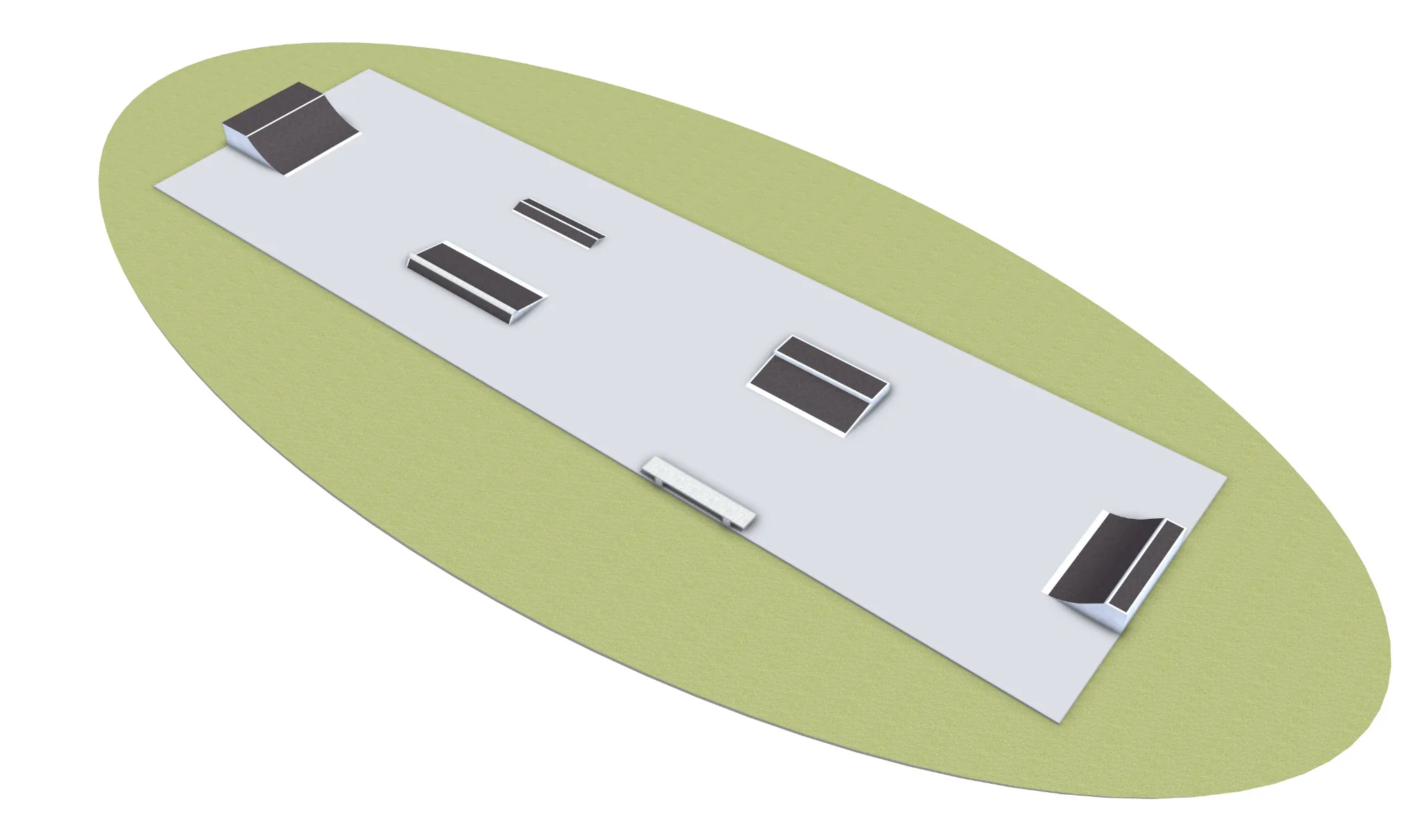
Depending on the location, target group and available space, we combine different modules into a fully functioning overall facility.

These include, for example:

  • Quarter pipes and banks
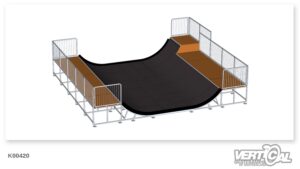
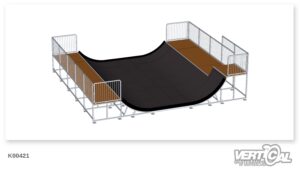
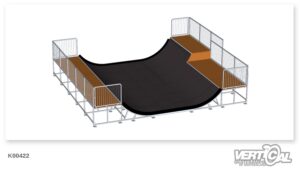
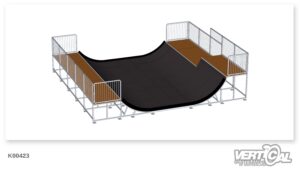
  • Mini ramps and micro ramps
  • Funboxes and pyramids
  • Rails and curbs
  • Ledges and hubbas
  • Manual tables
  • Spines
  • Copings and pool copings

What matters is not having as many elements as possible, but a sensible layout with good lines, sufficient room to move and options for different skill levels.

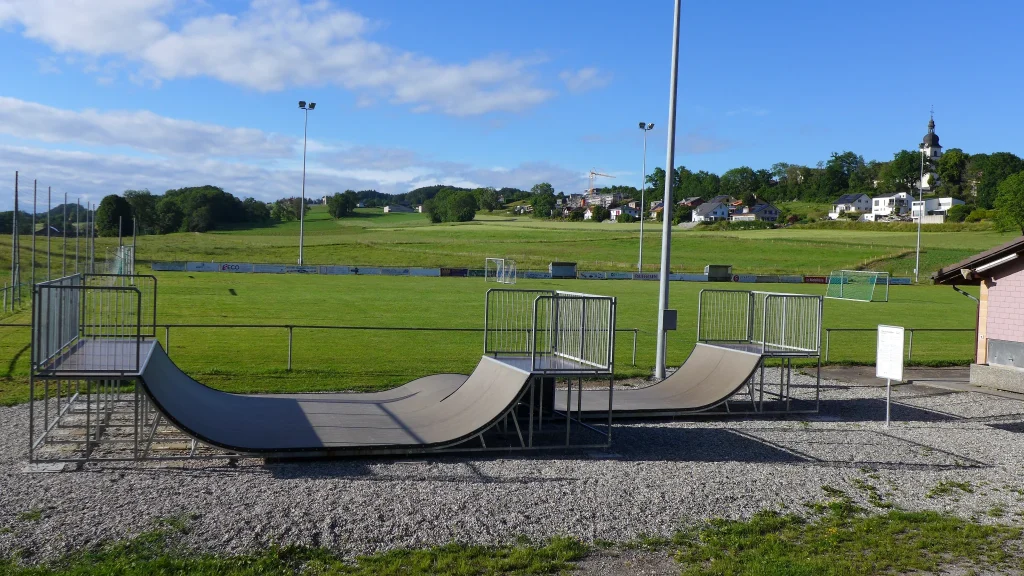
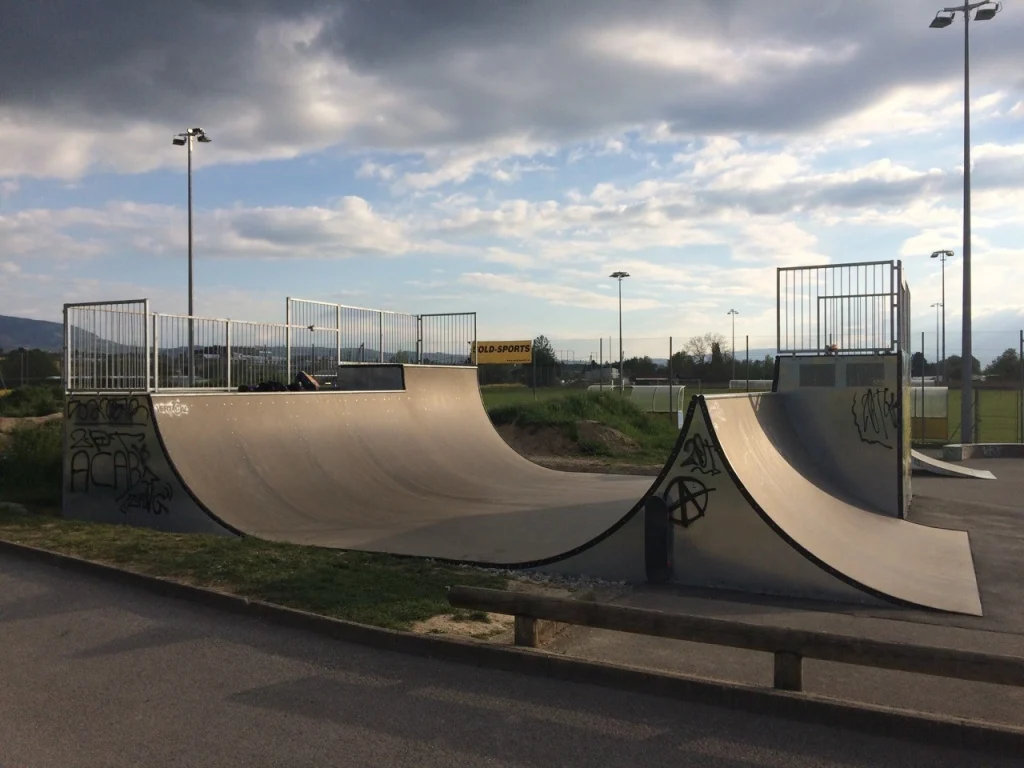
Miniramp and spine skate facility in Plan-les-Ouates by Vertical Technik.
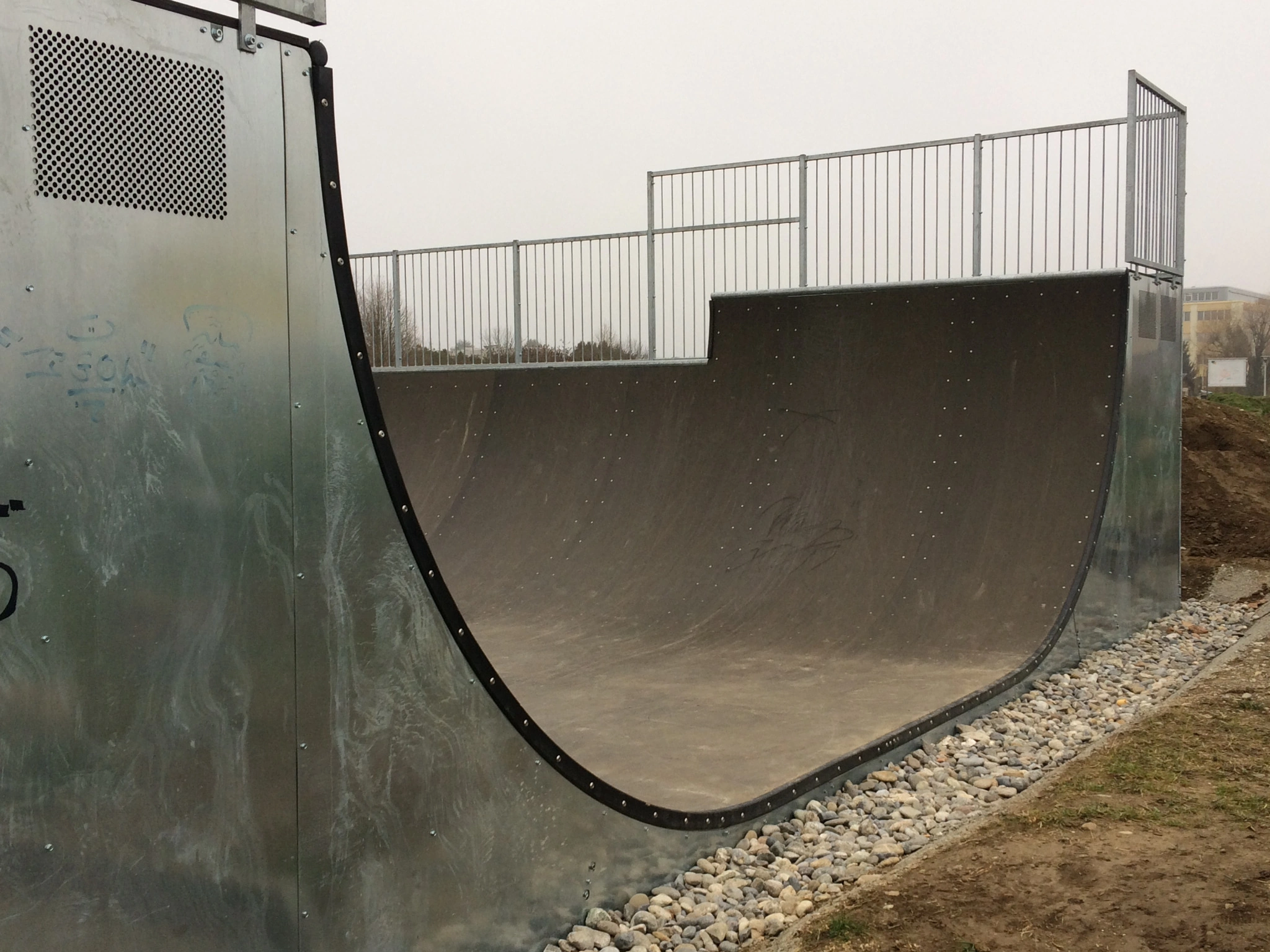
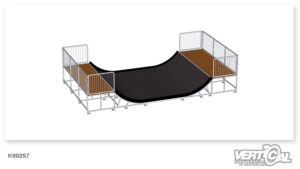
Ansicht einer mobilen Skateanlage "Funbox" mit SKATEFACE-Belag.
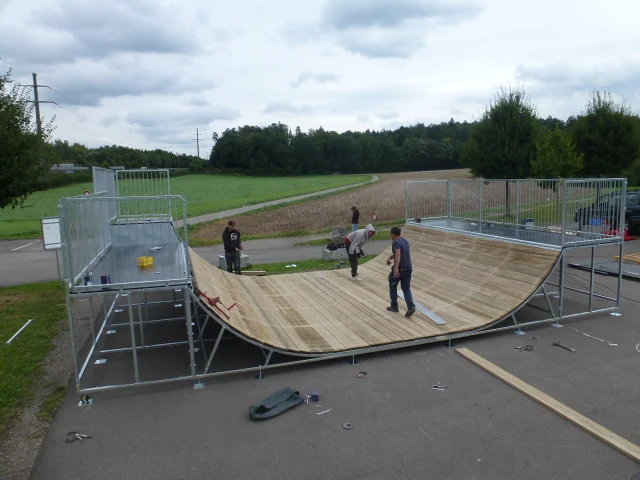
Ansicht eines modularen Skateparks mit dem SKATEFACE-Fahrbelag.
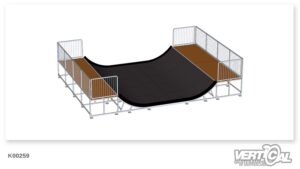
Ansicht eines modularen Skateparks mit mobilen Skateanlagen mit dem SKATEFACE-Belag.

Skatepark planning to EN 14974

When planning public skate facilities, we take into account the requirements of the European standard EN 14974.

This includes, among other things, ensuring:

  • required safety zones
  • riding flow and line layout
  • distances between elements
  • suitable access points
  • intended user groups
  • expansion options
  • site-specific operating requirements

For modular skate facilities, we create a suitable arrangement of the individual elements based on the available space and the project requirements.

Skatepark planning with user participation

A good skatepark isn’t created at the drawing board alone. Every municipality and every local scene has different needs. That’s why we involve future users as early as possible in the planning.

In participative design workshops, we work together with skaters, young people and clients:

  • the right layout of the skate elements
  • well-designed lines and riding routes
  • options for different skill levels
  • optimal use of the available space
  • requirements for operation and the surrounding area
  • possible educational or social support programmes

Feedback from the workshops flows directly into the planning. This ensures the result is not a randomly assembled modular facility, but a skatepark that fits the location and the users’ actual needs.

Depending on the project, young people can also be involved in a suitable way in the build or design. This creates a stronger sense of identification with the new skatepark.

From the initial idea to the finished skatepark

Vertical Technik supports skatepark projects through all key phases. Depending on the scope, this includes:

  • Site and needs analysis
  • User workshops
  • Concept and 3D planning
  • Rough cost estimate
  • Detailed design
  • Production of the skate elements
  • Delivery and installation
  • Acceptance and documentation
  • Inspection, maintenance and refurbishment

This gives municipalities, schools, clubs and other clients a location-specific solution from a single source.

Frequently asked questions about modular skateparks

What does a modular skatepark cost?

Costs depend on size, number of skate elements, riding surface, installation, transport and site requirements. After an initial assessment of the area and intended use, we prepare a suitable rough cost estimate or an individual quote.

What area is required for a skatepark?

That depends on which elements are used and how many people will use the facility at the same time. In addition to the actual footprint, adequate safety zones and sensible flow are also important. We assess the available area and develop a suitable layout from it.

What is the difference between a modular skatepark and a concrete park?

Modular skateparks are relocatable and can be adapted or expanded more quickly. Concrete skateparks are permanently installed and offer particularly free-form shapes as well as very high durability. Which solution is more suitable depends on location, budget, duration of use and project objective.

Can a modular skatepark be modified later?

Yes. Individual skate elements can be added, replaced or rearranged. This allows a facility to grow with users’ needs or be adapted to new conditions.

Are mobile skate installations suitable for temporary use?

Yes. Mobile skate installations are very well suited for events, project weeks, pop-up parks, interim uses or trial phases. Depending on the project, the elements can be rented, rented long-term or purchased.

What must the ground surface meet for a modular skatepark?

The ground surface should be load-bearing, as level as possible and suitable for use with skateboards, scooters, BMX or inline skates. Existing asphalt or concrete surfaces are often suitable. Before implementation, we assess the site and structural requirements.

How is the safety of a modular skatepark taken into account?

For public skateparks, safety zones, clearances, flow, user groups and the arrangement of elements are taken into account, among other things. In doing so, we follow the DIN EN 14974 standard for skateparks and wheeled sports facilities.

Can existing skate installations be refurbished or retrofitted?

Yes, depending on condition and construction, existing skate installations can be inspected, refurbished or supplemented with new riding surfaces and elements. This often allows an older facility to remain in use and be adapted to current requirements.