For public spaces

Concrete skate parks

Contact us

Concrete skate parks – individually planned and built

A concrete skate park is far more than just a sports surface. It creates space for movement, interaction and a vibrant skate and roller sports culture.

Our concrete skate parks are developed specifically for the respective location and future users. In doing so, we combine functional skate park design with durable construction, high riding quality and a design that integrates into the existing environment.

Are you planning a concrete skate park or a new leisure project? Talk to us about the possibilities.

Contact us

Why a skate park made of concrete?

Cast-in-place concrete provides ideal conditions for durable and versatile skate parks. The riding surfaces can be modeled individually with few joints, allowing for harmonious transitions between different elements and areas.

Concrete skate parks are robust, weather-resistant and designed for intensive use. At the same time, concrete offers great design freedom: from small street facilities to complex combinations of bowl, flow and plaza areas, a wide variety of concepts can be realized.

Advantages of concrete skate parks:

  • high-quality riding surfaces with few joints
  • individual design suitable for the location
  • high resistance and long service life
  • low maintenance requirements
  • versatile combination of different skate elements
  • integration into parks and public open spaces

Individual skate park design

Every location has different requirements. Area, topography, subsoil, surroundings, budget and the needs of future users influence the skate park design.

Depending on the project, street and plaza areas, bowls, pools, flow parks, snake runs or combinations of different riding areas are created. Different levels of difficulty allow beginners as well as experienced skateboard, BMX, scooter and inline athletes a versatile use.

Even smaller or challenging plots can be used effectively. Slopes, existing park structures or limited areas are already taken into account during concept development.

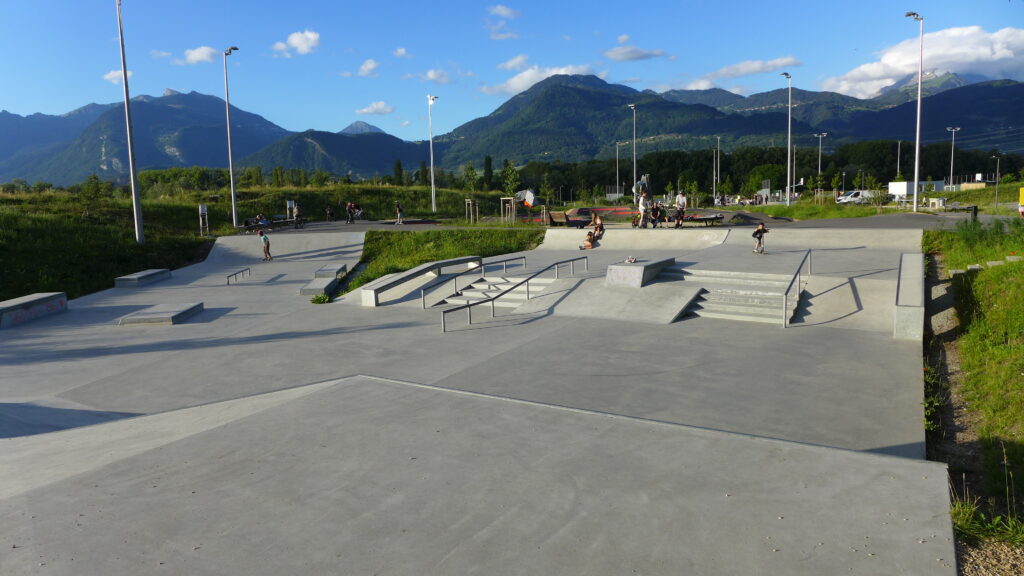
Ansicht einer Flow-Bowl in einem Betonskatepark.
Ein Skater im Air über ein Betonelement im Betonskatepark.

Planning skate parks together with users

The involvement of the local scene is an important part of the planning for us. In workshops and participation processes, young people, clubs, schools and other future users bring their experiences and wishes directly into the design.

Riding style, elements, lines and usage priorities are defined together. This results in skate parks that not only work from a planning perspective but also meet the actual needs on site.

Upon request, young people and local stakeholders can also be involved in individual phases of the realization in an appropriate form.

From planning to execution

Based on the site analysis and the requirements of future users, we develop an individual skate park concept. This is visualized as a 3D model and serves as a basis for coordination with municipalities, user groups and project partners. The visualizations can also be used for project communication, decision-making processes or sponsoring.

In the subsequent preliminary project, terrain, subsoil, foundation, drainage, materialization and surroundings are taken into account. If required, a geological report provides important information on the condition and load-bearing capacity of the subsoil. Based on this, we create the necessary planning documents, cost estimates and – depending on the project – the basis for the building application, tendering and awarding.

For the execution, we work with regional construction companies where possible and take over the coordination and construction management.
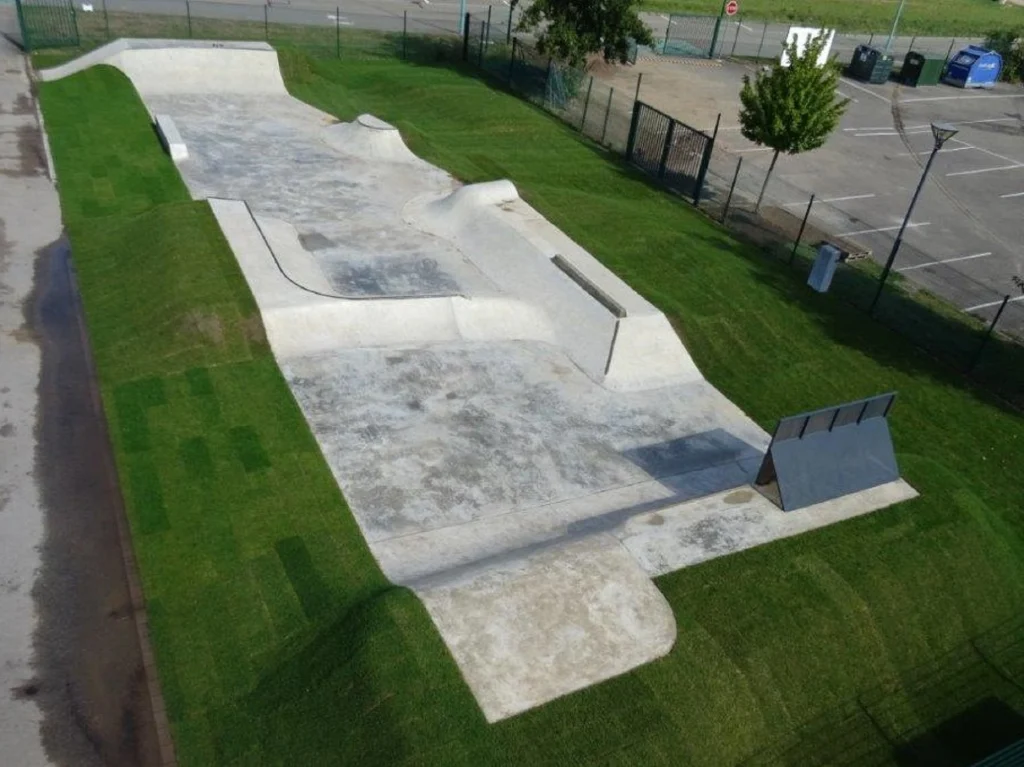
Bauphase eines Betonskateparks.
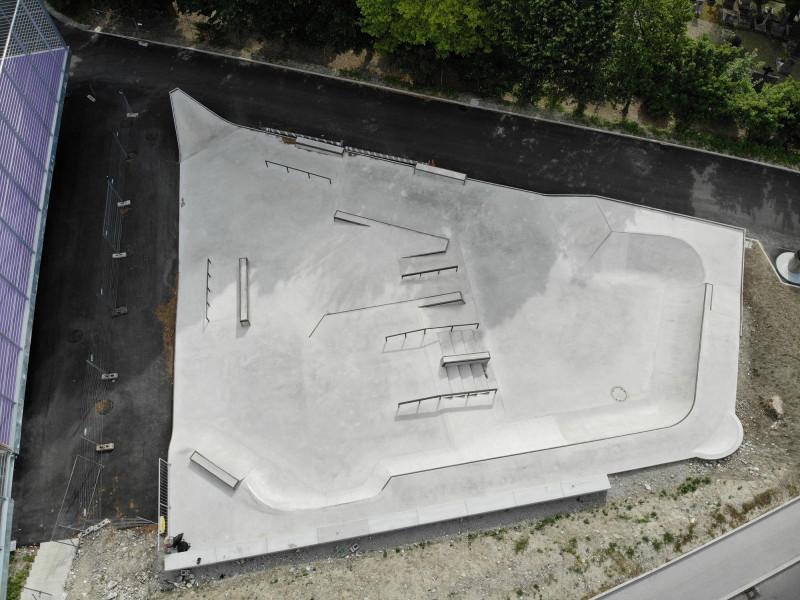
Luftaufnahme eines umfänglichen Betonskateparks in der Bauphase.

Precise implementation in cast-in-place concrete

The realization of a concrete skate park requires experience and craftsmanship precision. Transitions, banks, curbs, ledges, bowls and other elements are shaped, concreted and carefully finished directly on site.

Precise radii, clean transitions and high-quality riding surfaces are particularly important. Only when all elements are optimally coordinated with one another is a skate park created with natural flow and high riding quality.

Vertical Technik AG accompanies the project from the first concept idea through planning and construction management to the acceptance and handover of the finished facility.

Safety and long-term use

Our skate parks are planned and realized taking into account the requirements of EN 14974 for skate parks.

In addition to standard-compliant execution, we pay particular attention to robust construction, high-quality materials and the lowest possible maintenance costs. To maintain long-term value, we also offer regular inspections and maintenance of existing skate parks.

This includes checking riding surfaces, transitions and components, identifying and assessing cracks at an early stage and, if necessary, carrying out suitable measures such as repairs or concrete mineralization. In this way, damage can be repaired in good time and the safety, riding quality and service life of the facility can be maintained in the long term.

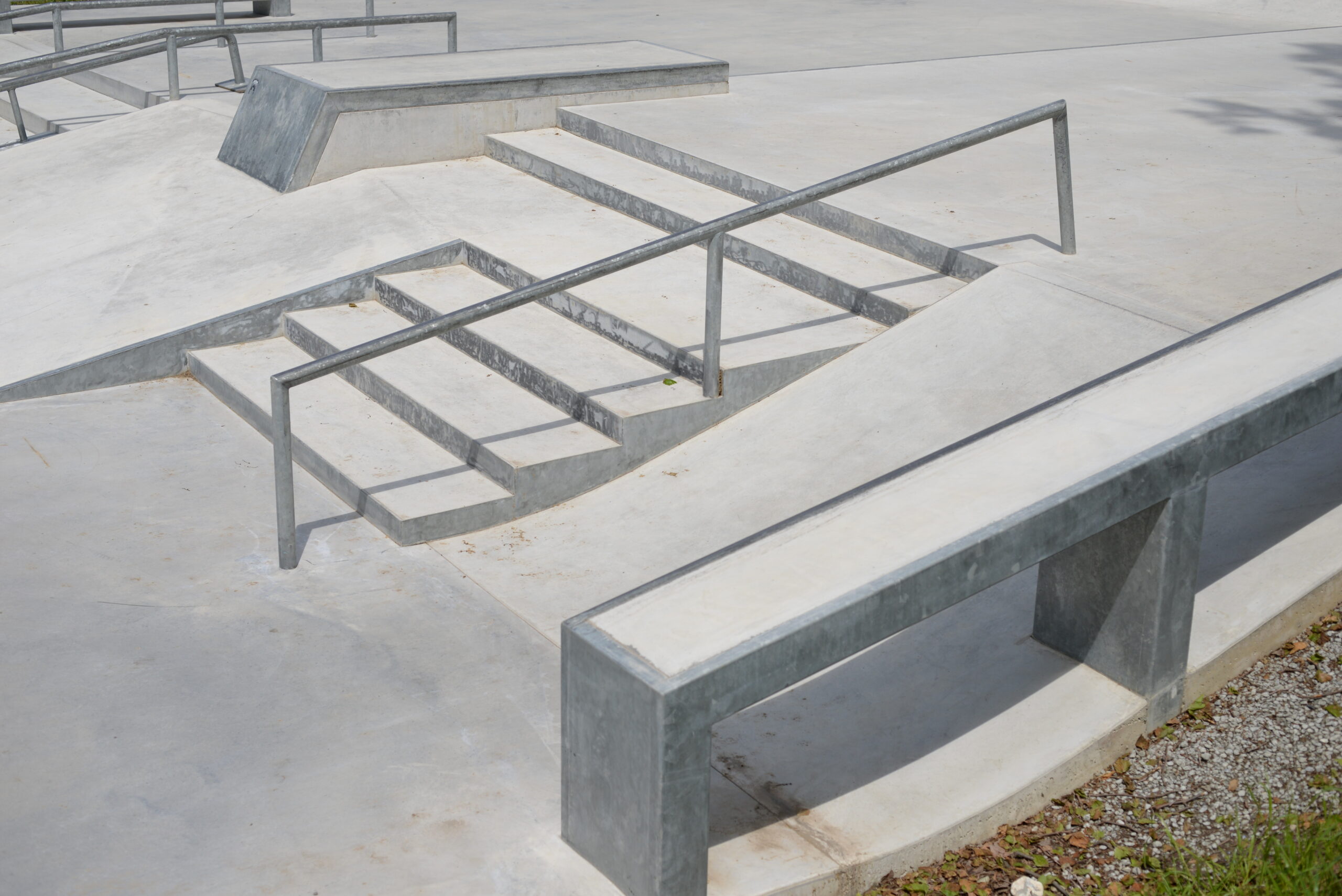
Detailansicht einer Chinabank mit Ledge in einem Betonskatepark.

Frequently Asked Questions about Concrete Skateparks

How long does it take from the initial idea to the finished concrete skatepark?

This depends heavily on project size, approval procedures, financing, and decision-making processes. The actual construction time is often only one part of the overall project. In particular, workshops, preliminary project, political decisions, building application, tendering, and awarding require sufficient lead time. Early project planning helps to set realistic deadlines and avoid delays.

What needs to be paid particular attention to when choosing a location?

In addition to the available space, accessibility, existing paths, neighborhood, terrain, drainage, ground conditions, and integration into public space are crucial. Recreational areas, lighting, or connection to other sports and leisure facilities can also play an important role. A good location therefore functions not only for sports but also in daily operation.

How can noise be considered for a skatepark?

Rolling noises and the use of the park should be considered during site selection. Distances to sensitive uses, terrain forms, existing buildings, or a suitable orientation of the facility can positively influence the situation. For critical locations, an early assessment of the local conditions is recommended before the project is too far advanced.

Can an old skatepark be converted into a concrete skatepark?

Basically, yes. Existing areas can often be included in a new plan. However, it is crucial whether the subsoil, foundation, drainage, and existing components are suitable for this. Depending on their condition, existing elements can be taken over, integrated, or replaced by new concrete forms. A condition assessment shows which solution is technically and economically sensible.

How is water prevented from collecting in the skatepark?

Functional drainage is a central component of the planning. Already in the design phase, gradients, low points, and drains are considered so that rainwater can be controlled and discharged. Especially for bowls and lower-lying areas, drainage must be coordinated with the terrain and civil engineering planning at an early stage.

Can a concrete skatepark be expanded later?

This is possible if a later expansion is already considered during the initial planning. Additional street elements, flow areas, or further recreational spaces can then be integrated more easily. For tight budgets, it can therefore be useful to develop an overall concept and then realize the facility in several stages.

Does a concrete skatepark always have to be designed only for skateboarders?

No. Modern skateparks are often used by various wheeled sports, including skateboarding, BMX, scooters, and inline skates. These user groups sometimes have different requirements for radii, speeds, obstacles, and line guidance. A balanced plan therefore considers as early as possible who will actually use the facility later.

How can a concrete skatepark be aesthetically integrated into its surroundings?

Concrete does not automatically mean a purely gray surface. Shaping, colored concrete, surfaces, adjacent green areas, seating options, and other landscape architectural elements can be adapted to the location. This way, a skatepark can become part of a park, school grounds, or public open space, instead of appearing as an isolated sports facility.

What happens if cracks or wear and tear occur after a few years?

Concrete is durable, but even a concrete skatepark should be regularly inspected. Small cracks or local damage can be detected early and professionally assessed before larger problems arise. Depending on the condition, repairs, surface treatments, or concrete mineralizations may be considered. Regular inspections help to maintain riding quality, safety, and lifespan in the long term.